Hoi An Rattan Weaving – Discover the Timeless Art of Vietnamese Handicrafts
Rattan weaving in Hoi An is one of those crafts. Simple strands of natural material are carefully shaped, bent, and woven into baskets, mats, bags, household items, decorative pieces, and other useful objects. What looks simple at first becomes fascinating when you watch an experienced craftsperson work.
For travelers interested in Vietnamese culture, traditional handicrafts, and authentic local experiences, discovering rattan weaving offers a different perspective on Hoi An. It is not simply about purchasing a handmade product. It is about seeing how natural materials, patience, and generations of knowledge come together.
You can discover more of Hoi An’s timeless art and of our traditional crafts as: Hoi An Bamboo Handicraft Workshop, Hoi An Lantern Class
For any further information about Hoi An Explorer, please contact via hotline 0905.223.343 (Ms.Tina)
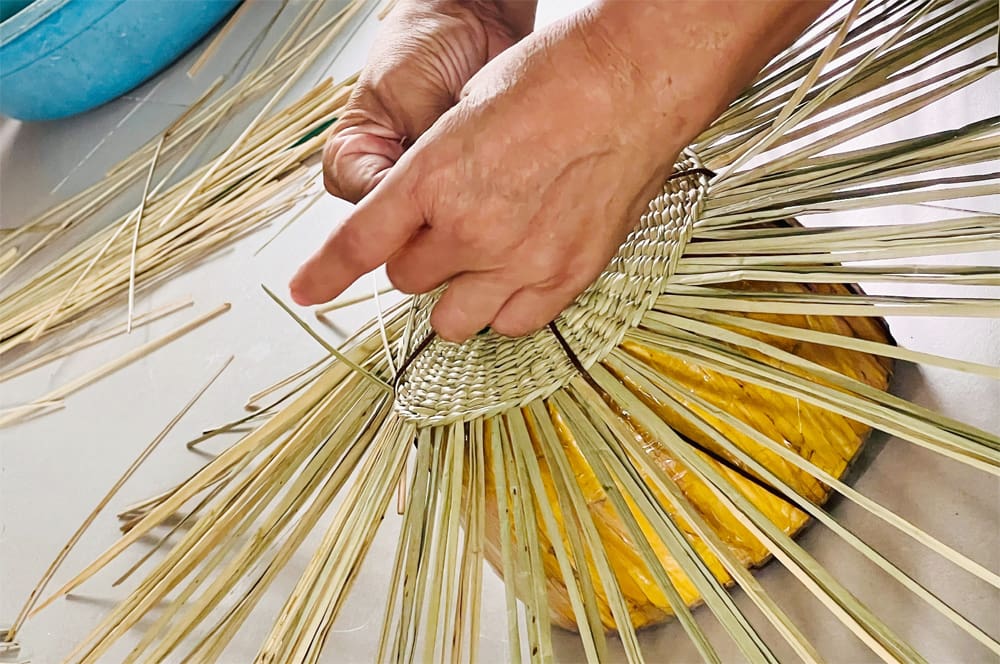
The Long Tradition of Rattan Weaving in Hoi An
Rattan has been used across Vietnam for generations because it is flexible, lightweight, and suitable for making practical household objects. In communities around Central Vietnam, local knowledge of preparing and weaving natural materials has traditionally been passed from one generation to the next.
In and around Hoi An, this relationship between people and natural materials can still be seen in local handicrafts. Artisans transform thin strips of rattan into functional objects while maintaining traditional weaving techniques that require considerable manual skill.
A finished basket may appear straightforward, but the process behind it is anything but ordinary. The artisan must select suitable material, prepare it carefully, maintain consistent tension while weaving, and shape the product so that it remains strong and attractive.
That combination of practicality and craftsmanship is part of what makes traditional Vietnamese rattan products so appealing. They are designed to be useful, but they also carry the character of the person who made them.
How Rattan Weaving Works
Watching rattan being transformed from a natural material into a finished product gives you a much better appreciation of the craft. Although techniques vary according to the product and local tradition, the process generally involves several important stages.
Selecting the Material
The quality of the raw material matters from the very beginning. Artisans select rattan according to its flexibility, strength, size, and suitability for the object they intend to create.
Different thicknesses can be used for different purposes. Stronger pieces may form the structure of a basket, while thinner strands can be used for detailed weaving or decorative patterns.
Preparing the Rattan
Freshly harvested rattan cannot simply be woven immediately. It needs to be processed and prepared so that it has the right flexibility and durability for crafting.
Depending on the traditional method being used, the material may be cleaned, dried, treated, softened, or divided into narrower strips. This preparation requires experience because material that is too dry may become difficult to bend, while poorly prepared strands may affect the strength of the finished product.
Creating the Shape
Once the material is ready, the artisan begins forming the basic structure. This is where practical knowledge becomes particularly important. The maker needs to understand how much pressure to apply and how tightly the strands should be positioned.
Weaving the Pattern
The weaving stage is where the personality of the craft really appears. Strands are passed over and under one another to create different patterns, textures, and levels of density.
Tighter patterns can provide additional strength, while more open designs can create a lighter decorative appearance. Even a small mistake can affect the shape, so concentration and patience are essential.
Why Traditional Rattan Craft Matters Today
Traditional handicrafts have an important place in modern tourism because they connect visitors with skills that cannot be mass-produced in quite the same way.
Rattan is also a natural material that has long been valued for its flexibility and usefulness. Properly managed natural materials can provide an alternative to some synthetic products, while handmade production can preserve traditional knowledge within local communities.
For travelers, choosing a locally made handicraft can therefore be more meaningful than purchasing an anonymous mass-produced souvenir. You can see the material, understand something about the process, and appreciate the time required to make the final product.
More importantly, meeting artisans and participating in craft experiences helps keep traditional skills visible to younger generations and to visitors from around the world.
Where to Discover Rattan Weaving Around Hoi An
If you want to explore traditional handicrafts beyond the main tourist streets, look toward the craft communities and rural areas surrounding Hoi An.
Cam Thanh Coconut Village
Cam Thanh is best known for its water coconut forest, basket boats, countryside scenery, and hands-on local experiences. The village is also a natural place to explore traditional crafts using bamboo and other natural materials.
A Hoi An Bamboo Handicraft Workshop can be a good addition to a countryside itinerary if you want to understand how local artisans turn simple materials into useful and decorative objects.
Kim Bong Craft Village
Located across the river from the Ancient Town, Kim Bong is particularly associated with traditional woodworking and other forms of craftsmanship. A visit here is useful for travelers who want to see a broader picture of Hoi An’s traditional artisan culture rather than focusing on one type of craft alone.
Exploring local craft villages also gives you the chance to see a slower side of Hoi An, where workshops and homes can exist alongside gardens, waterways, and everyday rural life.
Tam Thang and Tam Ky
For travelers exploring further south in Quang Nam, Tam Thang in the Tam Ky area is another place associated with traditional handmade products. Items such as woven mats and rattan hats reflect the practical role that natural-fiber crafts have played in local communities.
The area can also be combined with a visit to the Ky Anh Tunnels for travelers interested in exploring the wider cultural and historical landscape of Quang Nam.
Try a Hoi An Handicraft Workshop Yourself
Seeing an artisan weave rattan is interesting. Trying to weave it yourself is another experience entirely.
For visitors, a hands-on workshop provides an opportunity to understand just how much patience is involved. You quickly discover that keeping strands evenly spaced, maintaining the correct tension, and following a pattern takes concentration.
With an artisan guiding you through the process, however, the experience becomes approachable even if you have never made anything by hand before. You can learn basic techniques, experiment with the material, and create a small handmade item to take home.
It is particularly enjoyable for families and travelers who prefer interactive experiences over conventional sightseeing. Instead of simply taking photographs of local culture, you become part of the activity.
Rattan, Bamboo, and Lantern Crafts: Three Different Hoi An Experiences
Hoi An is an excellent destination for travelers who enjoy traditional Vietnamese handicrafts because different workshops reveal different sides of local creativity.
Rattan Weaving
Rattan focuses on flexible natural fibers and traditional weaving techniques. The finished products often combine practicality with attractive textures and patterns.
Bamboo Handicrafts
Bamboo is another important natural material in Vietnamese rural life. Through a Hoi An Bamboo Handicraft Workshop, visitors can discover how bamboo can be shaped into useful objects while learning more about traditional craftsmanship.
Hoi An Lantern Making
For something more colorful, try a Hoi An Lantern Class. Lanterns are one of the visual symbols most closely associated with the town, and creating one yourself gives the familiar Hoi An streetscape a much more personal meaning.
Combining several craft activities can make a particularly enjoyable cultural day, especially for travelers who want to understand Hoi An through local skills rather than only through its famous attractions.
What Makes a Handmade Rattan Souvenir Special?
Walking through Hoi An’s markets, you will find plenty of attractive souvenirs. A handmade rattan product, however, offers something different: a connection to traditional craftsmanship.
The subtle variations in color, texture, shape, and weaving are part of the charm. Because handmade products are created by people rather than machines, two pieces may never be completely identical.
A woven basket, rattan accessory, mat, or decorative item can therefore serve as a reminder of the time you spent exploring Vietnam. It is a practical souvenir, but it also represents a traditional skill and the hands that produced it.
Tips for Exploring Traditional Crafts in Hoi An
- Visit earlier in the day: Rural craft areas are often more peaceful in the morning.
- Talk to the artisans: If communication allows, ask how the material is prepared and how long a particular product takes to make.
- Try a workshop: A hands-on session gives you a much better understanding of the skill involved.
- Buy thoughtfully: Look for genuinely handmade products and ask about the materials when possible.
- Combine activities: Pair a craft workshop with a countryside, cooking, cycling, or basket-boat experience.
- Allow extra time: Craft experiences are most enjoyable when you are not rushing to the next attraction.
Combine Rattan Weaving with a Hoi An Cultural Day
A traditional craft experience does not have to be a standalone activity. It can easily become part of a full day exploring the cultural side of Hoi An.
You might begin in the countryside around Cam Thanh, explore traditional handicrafts, travel through the coconut waterways, and then return toward the Ancient Town for lunch. In the afternoon, you could join a cooking class or visit another artisan workshop before enjoying Hoi An after dark.
For travelers who want to experience Vietnamese food as well as traditional crafts, a Hoi An cooking class is an excellent complement. Food and handicrafts may seem unrelated, but both reveal how local knowledge is passed from one generation to another.
That is perhaps the most rewarding way to experience Hoi An: not simply looking at its heritage, but participating in it.
A Living Tradition Woven into Hoi An
Rattan weaving may not receive as much attention as Hoi An’s lanterns, historic buildings, or famous dishes, but it represents an important part of the region’s traditional craft culture.
Behind every woven object is a process that demands patience, dexterity, and an understanding of natural materials. The finished product may look simple, yet the knowledge required to create it has often been developed over many years.
For visitors, discovering this craft offers a chance to step away from the busiest tourist routes and see another side of Central Vietnam. You can watch artisans at work, try a few techniques yourself, purchase a meaningful handmade souvenir, and gain a deeper appreciation for the creativity embedded in everyday Vietnamese life.
In Hoi An, tradition is not something you only find inside a museum. Sometimes, it is right in front of you—woven slowly, strand by strand, by the hands of a local artisan.
YOU MAY LIKE IT

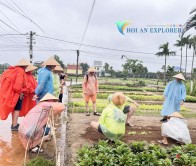
Hoi An Traditional Craft Villages – A Living Museum Of Ancient Town
Hoi An is not only famous for its ancient town with a strong East Asian architectural imprint but also a living museum of traditional craft villages. Hoi An Eco Tour love to share you the...