Exploring the Phuoc Kieu Bronze Casting Process – How Traditional Bronze Is Made
What makes the craft particularly interesting is the amount of patience behind every finished piece. Bronze casting is not simply about pouring hot metal into a mold. Each stage, from preparing the original design to shaping the mold and carefully finishing the casting, requires experience and attention to detail.
See details: >>> Phuoc Kieu Bronze Casting Village, Quang Nam
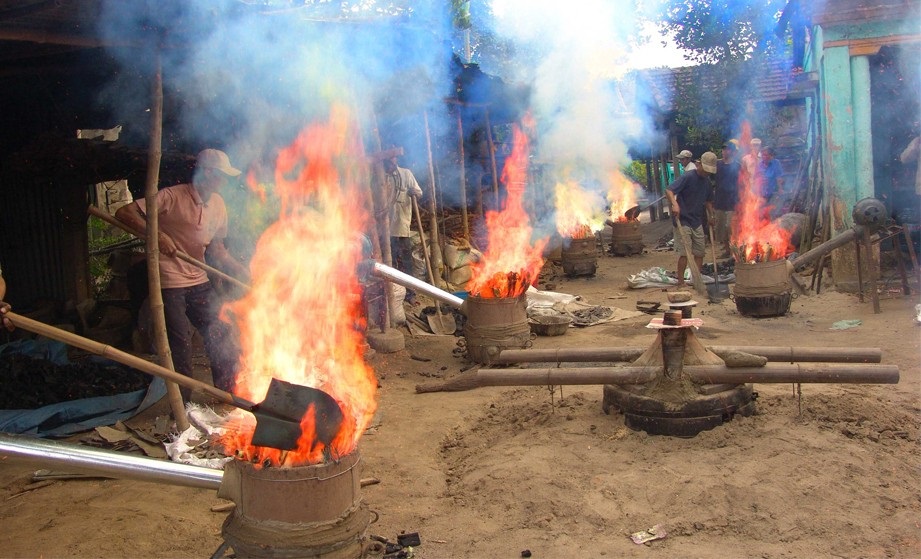
The Phuoc-Kieu-bronze-casting-process-Quang Nam
How Is Bronze Made at Phuoc Kieu Bronze Casting Village?
The exact techniques can vary depending on the type and size of the product, but traditional bronze casting generally involves several important stages. At Phuoc Kieu, generations of experience have helped local craftsmen refine these methods and adapt them to different types of bronze products.
Creating the Original Model
The first step is to create a model representing the shape and details of the object that will eventually be cast in bronze.
Traditionally, artisans may work with clay and other modeling materials to form the desired shape. This stage requires a good understanding of proportions and surface details because the quality of the original model directly influences the finished casting.
For a simple object, the modeling process may be relatively straightforward. More complicated statues, decorative pieces, or ceremonial objects can require considerably more time and precision.
Preparing the Casting Mold
Once the model is ready, artisans prepare a mold around it. The mold needs to capture the shape and fine details accurately while also being strong enough to withstand the extreme heat of molten bronze.
Traditional mold-making is one of the most important skills in the entire process. The material is carefully prepared, packed, shaped, and allowed to reach the appropriate condition before casting.
A poorly prepared mold can result in cracks, unwanted marks, incomplete details, or other defects in the final product.
Creating the Casting Cavity
Depending on the particular technique and product, artisans create the internal space into which the molten bronze will flow. Traditional casting methods may involve wax or other temporary materials to help form complex shapes and hollow sections.
This stage is especially important for objects with intricate designs. The artisan must make sure that the molten bronze can reach the necessary areas of the mold while allowing air and gases to escape during casting.
The result is a carefully prepared mold that is ready for the most dramatic stage of the process.
Melting the Bronze
Next, the bronze is heated in a furnace until it becomes molten. Bronze is an alloy based primarily on copper and tin, although the exact composition can vary according to the product and desired characteristics.
The furnace area can be one of the most impressive parts of a traditional workshop. The intense heat and glowing metal give visitors a clear impression of the physical demands of bronze casting.
Experienced craftsmen carefully monitor the molten metal and prepare it for pouring. Timing matters because the bronze must be in suitable condition when it enters the mold.
Pouring the Molten Bronze
When the bronze is ready, it is carefully poured into the prepared mold. This is a critical moment in the entire production process.
The molten metal needs to flow into the mold properly and fill the intended cavity. The artisan’s experience plays an important role in controlling the pouring process and reducing the risk of defects.
For visitors lucky enough to see this stage during a workshop visit, the sight of glowing bronze being poured into a traditional mold is often one of the most memorable parts of the experience.
Cooling and Removing the Mold
After the bronze has been poured, the casting must be left to cool and solidify. The amount of time required depends on the size and design of the object.
Once the bronze has cooled sufficiently, the mold can be opened or removed. In traditional casting, parts of the mold may need to be broken away to reveal the newly formed bronze object.
At this point, the product may look complete at first glance, but considerable work can still be required before it reaches its final appearance.
Cleaning, Polishing, and Finishing
The final stage is where the rough casting becomes a finished bronze product. Artisans remove excess material, clean the surface, smooth rough areas, and refine the details.
Depending on the object, the finishing process may include grinding, polishing, shaping, or adding decorative details. Some pieces require only basic finishing, while large statues, ceremonial objects, and highly detailed products may take much longer.
This stage demonstrates why a handcrafted bronze object cannot be judged only by its appearance. The final surface is the result of many hours of skilled manual work.
Why Is the Phuoc Kieu Bronze Casting Process Special?
Phuoc Kieu is more than a place where bronze objects are manufactured. It represents a traditional craft community in which knowledge and techniques have been passed between generations.
Several qualities make the village’s craftsmanship particularly interesting:
- Generational knowledge: Traditional techniques have been maintained and adapted by local craftspeople over time.
- Handmade production: Many stages still depend heavily on the artisan’s practical skills and judgment.
- Detailed craftsmanship: Intricate designs require careful modeling, casting, cleaning, and finishing.
- Cultural significance: Bronze products are connected with Vietnamese religious, musical, ceremonial, and household traditions.
- Distinctive sound: Bronze gongs and cymbals require particular attention to shape and material characteristics to produce their desired tones.
What Can You See at Phuoc Kieu Bronze Casting Village?
When visiting Phuoc Kieu Bronze Casting Village in Quang Nam, travelers may encounter a wide variety of bronze creations. Depending on the workshop, these can include:
- Bronze Buddha and religious statues
- Temple bells and decorative bells
- Incense burners and ceremonial objects
- Gongs and cymbals
- Decorative vases and bowls
- Animal sculptures
- Household ornaments and souvenirs
Seeing these finished products after learning about the production process gives visitors a better appreciation of the skill involved. A bronze bell, for example, may look simple from a distance, but its final shape, thickness, surface, and finishing all contribute to its quality and appearance.
Visiting Phuoc Kieu and Watching the Artisans
A visit to Phuoc Kieu offers something different from exploring Hoi An Ancient Town. Instead of historic houses and lantern-lined streets, you enter a working craft community where traditional production remains part of everyday life.
Visitors can explore workshops, observe artisans when production is taking place, and see examples of bronze products at different stages of completion.
Because bronze casting involves furnaces, molten metal, and specialist equipment, always follow the instructions of the workshop staff. Keep a safe distance from active production areas and ask permission before photographing artisans or workshop processes.
Combine Phuoc Kieu with Other Hoi An Craft Villages
If you enjoy traditional Vietnamese handicrafts, consider creating a broader cultural itinerary around Hoi An and Quang Nam. The region has several craft communities where different materials and techniques are still practiced.
Thanh Ha Pottery Village: Discover traditional ceramic production and hands-on pottery activities through a Thanh Ha pottery village daily tour.
Bamboo Craft: Explore the versatility of bamboo with a Hoi An Bamboo Class and Workshop in the countryside.
Silk and Embroidery: Learn more about traditional textile craftsmanship through a Hoi An silk weaving and embroidery class.
Lantern Making: Create your own colorful souvenir while learning about one of Hoi An’s most recognizable traditional crafts with a Hoi An lantern-making class.
You can also explore more cultural experiences through Hoi An tours that connect the Ancient Town with the surrounding countryside and traditional villages.
Tips for Exploring the Bronze Casting Village
- Wear comfortable clothing and shoes suitable for walking around workshops.
- Be cautious around furnaces, hot metal, tools, and active production areas.
- Ask permission before taking close-up photographs of artisans or their work.
- Take time to look at both finished products and works in progress.
- Ask local artisans about the history and techniques behind the objects when possible.
- If you purchase a bronze item, ask about its production method and how it should be cleaned or maintained.
- Combine Phuoc Kieu with other craft villages to make the most of your cultural day trip from Hoi An.
Discover the Craftsmanship Behind Every Bronze Creation
The Phuoc Kieu bronze casting process reveals the remarkable amount of knowledge, patience, and manual skill hidden behind every finished piece. From the first model and carefully prepared mold to the intense heat of the furnace, the pouring of molten bronze, and the final polishing, each stage contributes to the character of the finished object.
For travelers exploring traditional craft villages near Hoi An, Phuoc Kieu provides a valuable opportunity to see Vietnamese craftsmanship up close. It is not simply a place to admire beautiful bronze products; it is a place to understand the people, techniques, and traditions that keep an old craft alive.
Combine your visit with other Hoi An craft village tours, and you can experience an authentic side of Quang Nam that goes beyond the Ancient Town. From bronze and pottery to bamboo, silk, and lanterns, these traditional crafts tell an important story about the creativity and cultural heritage of Central Vietnam.
See more Hoi An tours craft village at details:
Thanh Ha pottery village daily tour
Hoi An Bamboo Class and workshop
YOU MAY LIKE IT

Phuoc Kieu Bronze Workshops and Demonstrations – See Traditional Craftsmanship in Action
Inside the village, the atmosphere can feel quite different from the busy tourist streets of Hoi An. You may hear the sound of metal being worked, see traditional tools and molds, and watch...