Phuoc Kieu Bronze Casting Village, Quang Nam – Discover Vietnam’s Ancient Craft
For centuries, local artisans in Phuoc Kieu have worked with bronze, using techniques passed from one generation to the next. Their workshops transform raw metal into religious statues, bells, decorative objects, household items, and other handmade products.
A visit to this traditional craft village offers more than an opportunity to shop for souvenirs. It provides a close-up look at the patience, precision, heat, and craftsmanship behind one of Vietnam’s enduring traditional industries.
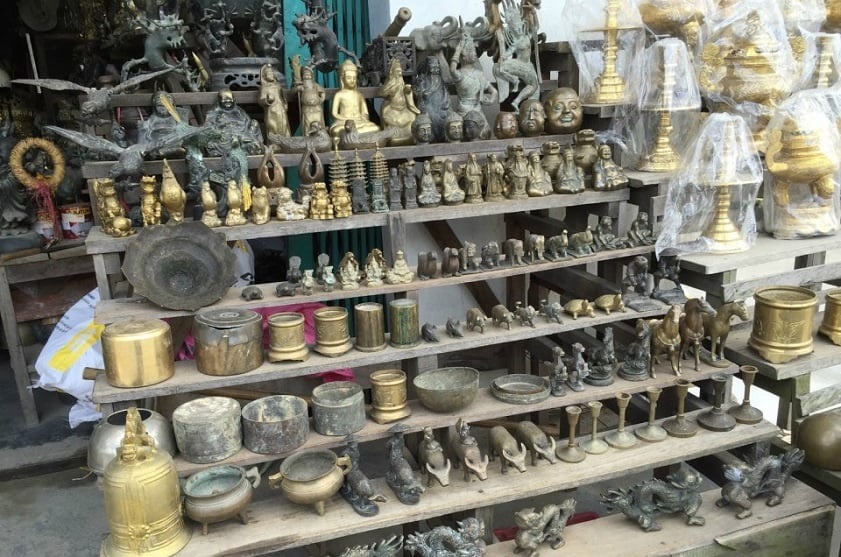
Phuoc-Kieu-Bronze-Village- Quang Nam-Vietnam
The History of Phuoc Kieu Bronze Casting Village
Phuoc Kieu is traditionally associated with the long history of bronze craftsmanship in Quang Nam. The craft developed through generations of artisans who gradually refined casting, shaping, engraving, and finishing techniques.
The village’s location in the historic Quang Nam region also contributed to the development of handicrafts and trade. As communities, temples, religious institutions, and households grew, bronze products became important for both practical and ceremonial purposes.
Rather than being a craft that can be learned overnight, bronze casting requires years of experience. Artisans must understand the behavior of heated metal, the preparation of molds, temperature control, finishing, and the subtle details that determine the quality of the final product.
Knowledge of these techniques has traditionally been handed down within artisan families, helping preserve the distinctive character of the village’s bronze work.
How Bronze Casting Works at Phuoc Kieu
One of the most interesting parts of visiting a bronze-casting village is seeing how an ordinary piece of metal is gradually transformed into a finished object.
Designing the Object
Everything begins with a design. Depending on the final product, artisans determine its shape, dimensions, decorative patterns, and functional requirements before preparing the mold.
Creating the Mold
The mold is a critical part of the process because it determines the shape and many of the details of the finished bronze object. Traditional techniques may involve carefully prepared molding materials shaped according to the desired design.
Melting the Bronze
The metal is heated to an extremely high temperature until it becomes molten. This stage requires experience and careful handling, as the artisan needs to work with intense heat while ensuring that the material reaches the appropriate condition for casting.
Pouring the Molten Metal
Once the bronze is ready, it is carefully poured into the prepared mold. The molten metal fills the space and begins to cool, gradually taking the form of the intended object.
Removing and Finishing
After cooling, the mold is removed and the rough bronze piece is revealed. It may still require considerable work before it becomes a finished product.
Artisans can then trim, carve, polish, smooth, and refine the surface. Decorative details are carefully worked by hand, giving each piece its final appearance.
What Do Phuoc Kieu Artisans Make?
The range of products made in Phuoc Kieu reflects both the practical and spiritual traditions of Vietnamese life.
Religious and Spiritual Objects
Bronze has long played an important role in Vietnamese religious and cultural spaces. Artisans create various religious objects and statues used in temples, pagodas, shrines, and other places of worship.
Depending on the workshop, visitors may encounter bronze statues, incense burners, bells, ceremonial objects, and other traditional items.
Bronze Bells and Musical Objects
Bells are among the products strongly associated with traditional bronze craftsmanship. Their production requires not only knowledge of casting but also an understanding of thickness, shape, and sound.
The finished bell is more than a decorative object—it can become part of the cultural and spiritual atmosphere of a temple or community.
Decorative Bronze Products
Smaller bronze pieces are popular with visitors looking for distinctive Vietnamese souvenirs. Vases, bowls, animal figures, decorative sculptures, and ornamental objects can make memorable additions to a home.
Practical Household Items
Bronze has also been used to create functional objects for everyday life. Depending on the workshop, visitors may see traditional household utensils and other practical products alongside more artistic creations.
Why Visit Phuoc Kieu Bronze Casting Village?
For travelers staying in Hoi An, Phuoc Kieu offers a chance to go beyond the famous attractions and discover a living craft tradition.
Instead of simply looking at finished products in a shop, visitors can observe the work involved in creating them. The sound of tools, the heat of the workshop, the smell of metal and molding materials, and the concentration of the artisans create an experience that feels very different from a conventional sightseeing stop.
It is also a meaningful way to support traditional crafts. Purchasing a locally made bronze product directly or through a reputable workshop helps contribute to the continued survival of these specialized skills.
Phuoc Kieu as Part of a Hoi An Craft Village Tour
Phuoc Kieu can be particularly interesting when combined with other traditional craft villages around Hoi An and Quang Nam. Each village has its own materials, techniques, and cultural story.
Thanh Ha Pottery Village
Combine bronze craftsmanship with ceramics by visiting Thanh Ha Pottery Village. Here, visitors can discover traditional pottery techniques and even try shaping clay themselves.
Hoi An Bamboo Class and Workshop
For another hands-on experience, a Hoi An bamboo class and workshop introduces visitors to one of Vietnam’s most versatile natural materials.
Hoi An Silk Weaving and Handicraft Experience
Silk provides another fascinating look at traditional craftsmanship. A Hoi An silk weaving and embroidery class allows travelers to explore the skill behind traditional Vietnamese textiles.
Hoi An Lantern-Making Class
No craft tour around Hoi An would be complete without discovering the city’s famous lantern tradition. In a Hoi An lantern-making class, visitors can learn how these colorful decorations are constructed and create a souvenir of their own.
Exploring several craft villages gives travelers a much deeper understanding of Hoi An’s identity. The region’s cultural heritage is not confined to old buildings—it continues through the hands of local artisans.
What to Expect During a Visit
Phuoc Kieu is a working craft community rather than a conventional theme park. This is part of its appeal.
Depending on the workshop and timing of your visit, you may be able to observe artisans preparing molds, heating metal, casting objects, polishing bronze, or adding decorative details.
Workshop conditions can be hot and noisy, particularly near furnaces and casting areas. Visitors should follow local instructions and maintain a safe distance from active work areas.
Best Time to Visit Phuoc Kieu
The village can be visited throughout the year, but weather is worth considering if you are combining the visit with other outdoor activities around Quang Nam.
The relatively cooler period is generally more comfortable for exploring villages and combining several attractions in one day. During hotter months, visiting in the morning can make the overall experience more pleasant.
If your main interest is seeing the actual production process, ask your tour operator or local host about the best time to visit. Workshop activities can vary depending on production schedules.
How to Get to Phuoc Kieu from Hoi An
For travelers staying in Hoi An Ancient Town, visiting Phuoc Kieu is possible as part of a countryside or craft-village excursion. Private cars, bicycles, and organized tours can all be suitable depending on your itinerary.
Rather than making a separate trip only for bronze casting, many travelers choose to combine the village with other attractions in Quang Nam. This creates a more complete day exploring the region’s traditional crafts and rural communities.
What to Buy as a Souvenir
If you want to bring home something more meaningful than a mass-produced souvenir, a small bronze object can be an interesting choice.
Consider looking for:
- Small decorative bronze sculptures
- Miniature bells
- Traditional animal figures
- Small incense burners
- Decorative bowls or vases
- Other locally crafted bronze ornaments
When purchasing, ask about the item’s production process and whether it was made locally. A short conversation with the artisan or shopkeeper can make the souvenir much more personal.
Tips for Visiting a Traditional Craft Village
- Wear comfortable clothing: Workshops can become hot, especially near casting areas.
- Wear suitable shoes: Closed-toe shoes are preferable in working environments.
- Ask before taking photographs: Respect artisans and workshop rules.
- Keep children close: Furnaces, molten metal, and tools can be dangerous.
- Support local artisans: Buying a genuine locally made product helps preserve traditional skills.
- Combine attractions: Pair Phuoc Kieu with other craft villages or countryside experiences around Hoi An.
- Allow enough time: The experience is more enjoyable when you can watch the artisans rather than simply passing through.
Discover the Craftsmanship Behind Hoi An
Phuoc Kieu Bronze Casting Village offers a fascinating glimpse into a part of Quang Nam’s cultural heritage that can easily be overlooked by visitors focused on Hoi An’s Ancient Town.
Here, the story of Vietnam is told through fire, metal, handmade molds, traditional tools, and generations of knowledge. Every finished bronze object represents much more than a piece of decoration—it reflects the patience and craftsmanship of the people who continue to keep the tradition alive.
For travelers who enjoy cultural tourism, handicrafts, photography, and authentic local experiences, a visit to Phuoc Kieu can be a rewarding addition to a Hoi An itinerary.
And if you have time to explore further, combine the experience with Hoi An tours and other traditional craft villages. Discover pottery at Thanh Ha, bamboo craftsmanship in Cam Thanh, silk traditions, and the colorful art of lantern making—and see how the cultural heritage of Hoi An continues to live through local hands.
See more Hoi An tours craft village at details:
Thanh Ha pottery village daily tour
Hoi An Bamboo Class and workshop
Hoi An silk weaving class and workshop
If confirm booking please send us the list includes: Name, date of birth, email address (if available) or mobile numbers to companies for buying insurance. Or send all information as your request via WhatsApp >>>
YOU MAY LIKE IT

Phuoc Kieu Bronze Casting Village – Discover the Most Beautiful Bronze Creations
What makes Phuoc Kieu special is not simply the number of bronze products on display. It is the combination of traditional knowledge, careful handcrafting, and the unmistakable character...