Hoi An Wet Rice Farming With Buffalo – A Unique Countryside Experience
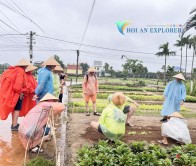
Hoi An wet rice farming with buffalo is a hands-on countryside experience that allows travelers to see how local farmers prepare the land, plant rice, care for their fields, and eventually harvest the crop. Instead of simply looking at green rice paddies from a sightseeing bus, you can put on traditional farming clothes, work alongside local farmers, and even try guiding a water buffalo through the muddy field.
To explore rural Hoi An more closely, you can cycle through the countryside around Tra Que Vegetable Village, Cam Kim Village, or Cam Thanh Coconut Village. Each area reveals a different part of traditional life beyond Hoi An Ancient Town.
See more details >>> Hoi An wet rice growing daily tour half day experience
For any further information about Hoi An travel, please contact via hotline 0905.223.343 (Ms.Tina)
What Makes Hoi An Wet Rice Farming Special?
The rice fields around Hoi An are more than agricultural land. They form an important part of the countryside landscape and provide a window into the traditional lifestyle of local communities.
For generations, farmers have adapted their cultivation methods to the area’s climate, waterways, and fertile soil. Although modern farming equipment is increasingly common, traditional techniques remain an important part of the cultural identity of rural Hoi An.
Rice Is at the Heart of Vietnamese Rural Life
Rice is one of Vietnam’s most important agricultural crops and a staple ingredient in everyday Vietnamese cuisine. It appears in countless dishes, from steamed rice and rice noodles to banh xeo, banh it, rice cakes, and traditional rice wine.
Seeing how rice is grown gives visitors a better appreciation for the food they enjoy throughout their trip. A simple bowl of rice suddenly has a much bigger story behind it.

Hoi An Wet Rice Farming With Buffalos
Traditional Farming Methods
One of the most interesting parts of a Hoi An wet rice tour is learning about traditional cultivation methods. In certain farming experiences, local farmers demonstrate how buffalo were traditionally used to plow and prepare the soil.
Working with a water buffalo is very different from watching a demonstration. You have to learn how to hold and control the traditional plowing equipment while responding to the animal’s movements and the condition of the muddy field.
It can be challenging at first, but that is exactly what makes the activity so memorable.

Discover Different Rice Varieties
Rice is not a single uniform crop. Different varieties can have different textures, shapes, aromas, and cooking characteristics.
Local farming traditions have helped preserve knowledge about rice cultivation and the relationship between particular crops and local growing conditions. During a farming tour, your guide or host can explain more about the varieties grown in the region and how rice is used in Vietnamese cooking.

Where Can You Experience Rice Farming Near Hoi An?
Several rural areas around Hoi An provide access to rice fields and traditional agricultural landscapes. Each has its own atmosphere and can be incorporated into a countryside itinerary.
Tra Que Vegetable Village
Tra Que is best known for its vegetable gardens and traditional farming practices, but the surrounding countryside also offers beautiful views of rice fields and rural landscapes.
A cycling route through the area allows you to combine agricultural scenery with visits to local farms and traditional food experiences.
Cam Kim Village
Cam Kim offers a quieter countryside atmosphere across the river from central Hoi An. The area is known for traditional crafts and rural landscapes, making it a good destination for travelers who want to explore beyond the Ancient Town.
Rice paddies, village roads, small homes, and agricultural activities create a peaceful setting for cycling and farming experiences.
Cam Thanh Village
Cam Thanh is famous for its Bay Mau water coconut forest and basket boat experiences, but the surrounding countryside also includes agricultural land and traditional village scenery.
Combining rice farming with a Cam Thanh visit can create a varied day of experiences covering agriculture, waterways, fishing, and local cuisine.
How Does the Hoi An Wet Rice Planting Process Work?
Traditional rice cultivation involves several stages, from preparing the soil to processing the harvested grains. The exact techniques and timing can vary depending on the season and local farming conditions, but the basic process provides a fascinating insight into agricultural life.
Step 1: Prepare the Soil
Before rice can be planted, the field must be prepared. Farmers plow and harrow the soil to loosen it and create suitable conditions for young rice plants.
In traditional farming demonstrations, the water buffalo may be used to pull a plow through the muddy field. This gives visitors an opportunity to see a farming technique that was once essential to rural life across Vietnam.
Step 2: Flood the Rice Field
Water is introduced into the field to create the wet conditions required for rice cultivation. The amount of water needs to be managed carefully throughout the growing cycle.
The network of canals and irrigation channels around agricultural areas plays an important role in helping farmers manage water.
Step 3: Prepare the Seedlings
Rice seedlings are prepared before they are moved into the main field. Depending on the cultivation method and season, young plants may first be grown in a nursery area before transplantation.
This stage requires careful timing because healthy seedlings provide the foundation for the next stage of cultivation.
Step 4: Plant the Rice
The young rice plants are transferred into the prepared wet field. Farmers place the seedlings into the soft soil at appropriate intervals so they have room to grow.
For visitors, this can be one of the most enjoyable hands-on activities. Walking barefoot or in suitable footwear through muddy rice fields and planting seedlings offers a completely different perspective on countryside life.
Step 5: Care for the Crop
Rice requires attention throughout its growing period. Farmers monitor the fields, manage water, remove unwanted plants, provide nutrients when needed, and watch for pests.
This stage demonstrates how much patience and daily work goes into producing a crop that may appear simple once it reaches the dining table.
Step 6: Harvest the Rice
When the rice reaches maturity, farmers harvest the crop. Depending on the farm and scale of production, harvesting may be done by hand or with machinery.
During a seasonal farming experience, visitors may have the opportunity to observe or participate in some traditional harvesting activities.
Step 7: Thresh the Grain
After harvesting, the rice grains must be separated from the stalks. This process is known as threshing and can be performed using traditional or modern methods.
Step 8: Dry and Process the Rice
The harvested grains need to be dried before further processing. Traditionally, rice can be spread out in the sun, allowing moisture to evaporate naturally.
The dried grains are then milled to remove the outer husk and other layers, producing the white rice commonly used for cooking.
Experience Hoi An Rice Farming Like a Local
If you want more than a sightseeing tour, consider joining a Hoi An Farming Tour. These experiences are designed to introduce visitors to traditional agricultural activities in a fun and interactive way.
Depending on the itinerary and farming season, you may have the chance to:
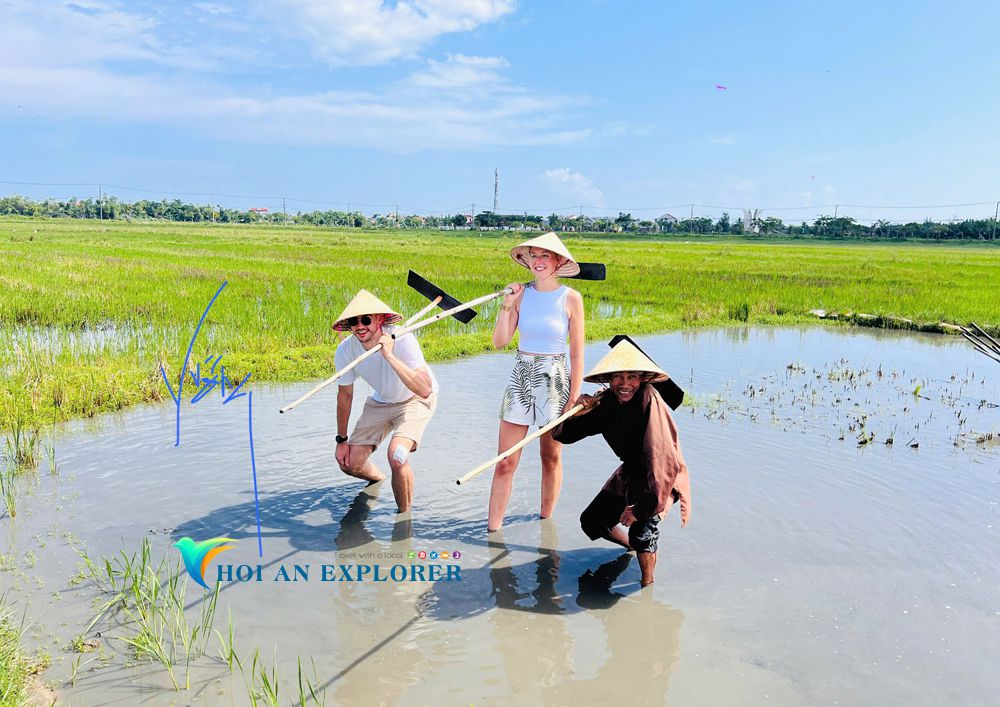
- Dress in traditional Vietnamese farmer clothing.
- Wear a traditional conical hat.
- Walk through rural rice fields.
- Try preparing soil for cultivation.
- Work with a water buffalo.
- Plant or tend young rice seedlings.
- Learn about local farming techniques.
- Try catching small fish or crabs.
- Cycle through the countryside.
- Taste dishes prepared with local ingredients.
What Is It Like to Work With a Hoi An Buffalo?
For many international visitors, the buffalo experience is the highlight of the tour.
Water buffalo have traditionally been important working animals in Vietnamese agriculture. They were used for plowing wet fields and transporting agricultural materials long before modern machinery became widely available.
During a guided experience, local farmers can demonstrate how the animal and traditional plow work together. Visitors may then have the opportunity to try it under supervision.
Do not expect to master the technique immediately. Controlling the plow requires coordination, patience, and communication with the buffalo. The muddy conditions also add an element of fun.
More importantly, the experience helps travelers understand the physical effort behind traditional rice farming.
Dress Like a Vietnamese Farmer
Some farming tours provide traditional clothing such as simple farmer-style garments and a non la, the familiar Vietnamese conical hat.
Wearing traditional clothing can make the experience more immersive and also provides some excellent photo opportunities among the rice fields.
Choose clothes and footwear that you do not mind getting wet or muddy. Farming is not the time to wear your best travel outfit.
Try Catching Fish and Crabs
Rice farming is closely connected with the wider wetland environment. Depending on the season and tour program, visitors may also participate in traditional methods of catching small fish or crabs in the countryside.
These activities can be particularly entertaining for families and children because they transform a rural landscape into an outdoor classroom.
Rather than learning about agriculture from a book, you are experiencing it directly with local guidance.
Taste Traditional Hoi An Food After Farming
Working in the fields can certainly build an appetite. A farming experience is often followed by local food, allowing you to discover how agricultural products become part of everyday Vietnamese cuisine.
You may encounter dishes made with rice, fresh vegetables, herbs, noodles, and other local ingredients. Depending on the program, popular regional specialties such as banh xeo and banh it may also be part of the experience.
The connection between farming and food is one of the most rewarding aspects of this type of countryside tour.
Try Traditional Rice Wine
Rice is also used to produce traditional Vietnamese rice wine. Some local experiences introduce visitors to this long-standing craft and may offer a tasting opportunity for adults.
Rice wine can have a strong flavor and relatively high alcohol content, so visitors should enjoy it responsibly and only if they are of legal drinking age.
What Should You Bring for a Wet Rice Farming Tour?
- Comfortable clothing: Choose lightweight clothes suitable for warm weather.
- Footwear you can get dirty: Muddy fields are part of the experience.
- Sunscreen: Rice fields offer limited shade.
- Hat: Useful for sun protection.
- Water: Stay hydrated during outdoor activities.
- Insect repellent: Helpful when spending time around fields and waterways.
- Camera: Capture the countryside, buffalo, farmers, and rice fields.
- Small waterproof bag: Protect your phone and other valuables from mud and water.
Best Time to Experience Rice Farming in Hoi An
Rice cultivation follows seasonal agricultural cycles, so the appearance of the fields changes throughout the year. Depending on the season, you may see newly planted paddies, vibrant green rice plants, golden fields approaching harvest, or freshly harvested farmland.
If your main goal is to participate in a particular activity such as planting or harvesting, ask the tour operator about seasonal availability before booking.
Early morning is generally a comfortable time for outdoor farming activities because temperatures are cooler than during the middle of the day.
Why a Hoi An Wet Rice Tour Is Worth Adding to Your Itinerary
Hoi An Ancient Town is undoubtedly beautiful, but its countryside reveals another layer of the destination. Rice fields, buffalo, vegetable gardens, waterways, and traditional villages show how local communities have lived and worked for generations.
A Hoi An wet rice farming experience gives you the opportunity to become part of that landscape, even if only for a few hours.
You are not simply taking photographs of a buffalo in a rice field. You are learning how the animal was traditionally used, understanding the work involved in cultivating rice, meeting local farmers, and discovering the relationship between agriculture and Vietnamese cuisine.
Final Thoughts
Hoi An wet rice farming with buffalo is a memorable choice for travelers who want to step away from conventional sightseeing and experience rural Vietnam firsthand.
From cycling through the countryside and wearing a traditional farmer’s outfit to preparing muddy fields, working with a buffalo, planting rice, catching fish, and enjoying local dishes, the experience connects nature, agriculture, food, and culture in a very personal way.
If you are planning a Hoi An itinerary, make time to explore beyond the Ancient Town. Visit Tra Que, Cam Kim, or Cam Thanh, meet the people who work the land, and discover the story behind one of Vietnam’s most important crops.
YOU MAY LIKE IT

Delve into splendour party mood on Hoi An Viet Nam
New Year’s Eve is just round the corner, and if you’re planning something intriguing and innovative this year, nothing can work better than a New Year’s Eve Party in Hoi An ancient...