Popular Hoi An Calligraphy Styles – From Hán-Nôm Tradition to Modern Vietnamese Art
Walk through the lantern-lit streets of Hoi An and you will discover much more than historic houses, colorful markets, and riverside cafés. Behind the town’s charming architecture is a rich artistic culture, including the beautiful tradition of Vietnamese calligraphy.
For centuries, calligraphy has connected Vietnamese language, philosophy, spirituality, and visual art. In Hoi An, this heritage can still be seen on traditional signs, decorative panels, festive artwork, and handwritten pieces created for visitors.
Today, Hoi An calligraphy brings together different generations and artistic influences. Classical Hán-Nôm writing continues to represent Vietnam’s literary heritage, Quốc Ngữ offers a more accessible form of Vietnamese brush art, while contemporary artists experiment with modern lettering, materials, and design.
See more details >>> The calligraphy class in Hoi An attracts international tourists.
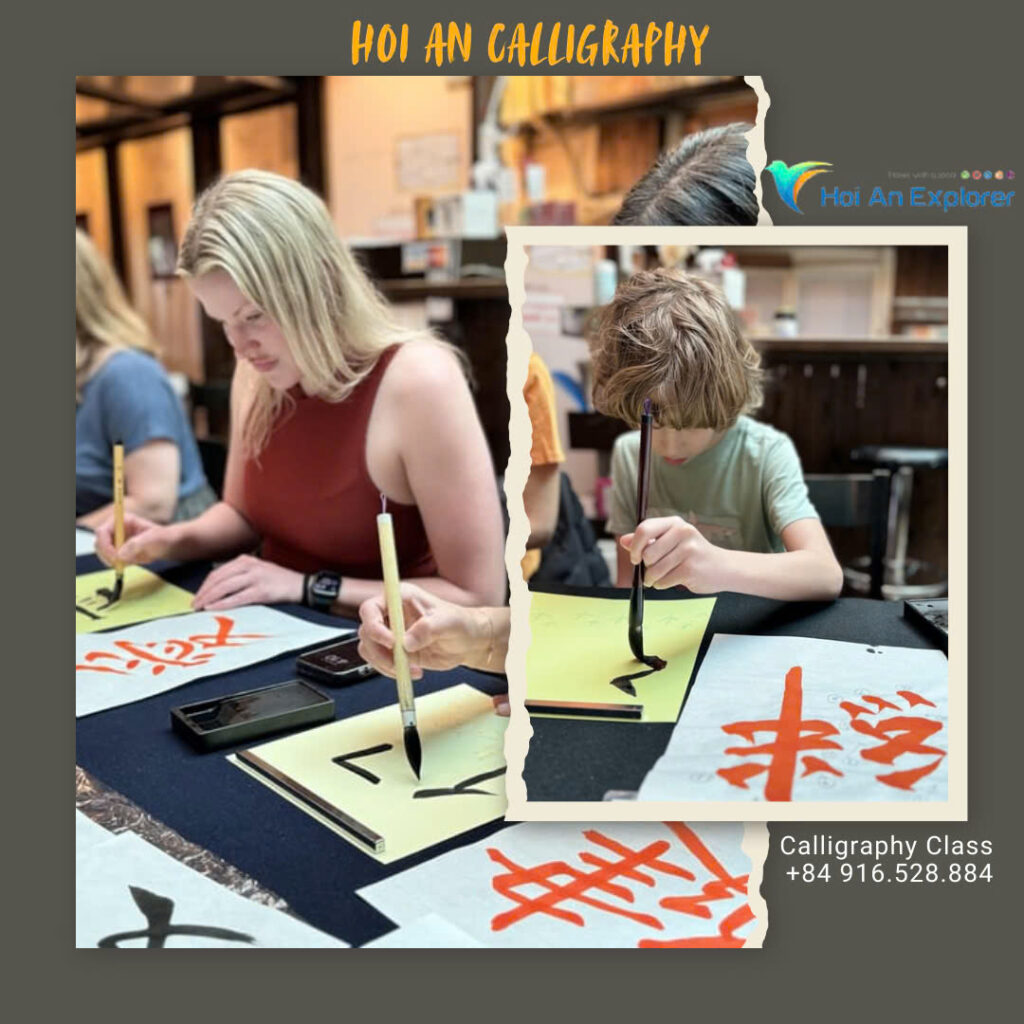
See moredetailsl >>> Hoi An calligraphy class daily tour by master Dong Huy.nh
Hán-Nôm Calligraphy: The Classical Heart of Vietnamese Brush Art
Among the different forms of Hoi An calligraphy, Hán-Nôm represents one of the oldest and most historically significant traditions. It is closely connected with Vietnam’s literary, educational, religious, and cultural heritage.
The term Hán-Nôm broadly encompasses two historical writing traditions: Hán Tự, based on classical Chinese characters, and Nôm, a Vietnamese-developed system that used adapted Chinese characters to represent Vietnamese language.
Hán Tự: The Language of Scholars and Classical Literature
For many centuries, classical Chinese characters were used by Vietnamese scholars, officials, poets, and intellectuals. Calligraphy written in Hán Tự was associated with education, literature, philosophy, and Confucian thought.
In Hoi An, visitors may encounter classical characters in temples, assembly halls, ancestral spaces, traditional homes, and historic buildings. The characters are often incorporated into decorative panels, couplets, plaques, and religious inscriptions.
Nôm: A Distinctively Vietnamese Writing Tradition
Nôm developed as a way of representing Vietnamese using characters adapted from the Chinese writing tradition. It played an important role in Vietnamese literature and allowed writers to express ideas, poetry, and stories in the Vietnamese language.
Although modern travelers may not be able to read Nôm, the visual beauty of the characters is easy to appreciate. Their flowing forms and carefully controlled brushwork create an unmistakable traditional atmosphere.
Quốc Ngữ Calligraphy: Traditional Brushwork with Modern Vietnamese Writing
One of the most accessible forms of contemporary Vietnamese calligraphy is Quốc Ngữ calligraphy. Unlike Hán-Nôm, Quốc Ngữ uses the Latin-based Vietnamese alphabet that people in Vietnam use in everyday life.
This makes the style particularly appealing to international visitors. You do not need to understand classical Chinese characters to recognize a Vietnamese word written in an artistic style.
Calligraphers can transform familiar Vietnamese words into decorative compositions using different brush sizes, curves, spacing, and ink techniques. The result combines the visual discipline of traditional brushwork with a writing system that remains part of everyday Vietnamese life.
Meaningful Vietnamese Words in Calligraphy
Many people choose calligraphy based on the meaning of the word rather than its appearance alone. Popular choices include:
- Phúc – associated with blessings, happiness, and good fortune.
- Lộc – traditionally connected with prosperity and good fortune.
- Thọ – associated with longevity and a long life.
- An – representing peace, calm, and tranquility.
- Tâm – connected with the heart, mind, and inner character.
For travelers, choosing a word with personal meaning can turn a simple piece of Vietnamese calligraphy into a memorable Hoi An souvenir.
Modern Calligraphy: Where Vietnamese Tradition Meets Contemporary Creativity
Calligraphy in Hoi An is not frozen in the past. Like many traditional art forms, it continues to evolve as artists experiment with new techniques, materials, and visual styles.
Modern calligraphy may combine Vietnamese brushwork with influences from Western typography, graphic design, illustration, and contemporary lettering. This creates artwork that feels both familiar and new.
Brush Lettering
Brush lettering gives artists greater freedom to vary the thickness and movement of individual strokes. Curved lines, flowing forms, and expressive lettering can create a playful and contemporary appearance.
This style is especially popular among younger artists and travelers who want to experiment with calligraphy without following strictly classical forms.
Minimalist Calligraphy
Not every piece of calligraphy needs to be elaborate. Minimalist compositions may use just one meaningful word, a few carefully placed strokes, and plenty of empty space.
The simplicity allows the meaning of the word and the quality of the brushwork to become the main focus.
Calligraphy Beyond Paper
Contemporary artists are also taking Vietnamese calligraphy beyond traditional rice paper and scrolls. You may find lettering incorporated into lanterns, wooden signs, ceramics, decorative objects, paintings, and digital artwork.
This experimentation helps introduce calligraphy to new audiences while maintaining its connection with Vietnamese cultural identity.
Hoi An Calligraphy During Festivals and Special Occasions
Calligraphy becomes particularly visible during traditional celebrations. Tet, the Vietnamese Lunar New Year, is one of the most important times to see calligraphers creating meaningful words for local families and visitors.
During festive periods, people may request words associated with prosperity, happiness, health, peace, longevity, and success. Receiving a handwritten character is not simply about decorating a home; it can also represent a wish for the year ahead.
For visitors, watching a calligrapher work during a festival offers a fascinating glimpse into a Vietnamese tradition that remains connected to everyday hopes and family life.
Where to Experience Hoi An Calligraphy
You do not have to be an experienced artist to discover this traditional craft. Hoi An offers several ways for travelers to see, learn, and practice Vietnamese calligraphy.
Calligraphy Stalls and Local Artists
During cultural events and festive periods, local calligraphers may create personalized artwork for visitors. Watching the process is part of the experience: the artist prepares the brush, controls the ink, and creates each stroke with deliberate movements.
A personalized piece can also make a more meaningful souvenir than a mass-produced decoration because it is created specifically for you.
Join a Hoi An Calligraphy Class and Workshop
If you want a hands-on cultural experience, consider joining the Hoi An calligraphy class and workshop.
A workshop allows you to move from spectator to participant. Under the guidance of a calligraphy master, you can learn about the history and meaning of Vietnamese brush art while practicing how to hold and control the brush.
You may not create a perfect character on your first attempt—and that is part of the fun. Calligraphy requires patience, concentration, and repeated practice. The process gives you a chance to slow down and appreciate the discipline behind the finished artwork.
See more details >>> Hoi An Calligraphy Class Daily Tour with Master Dong Huynh.
Which Hoi An Calligraphy Style Should You Try?
The best style depends on what you want from the experience.
| Calligraphy Style | What Makes It Special | Best For |
|---|---|---|
| Hán Tự | Classical characters and historical heritage | History and culture lovers |
| Nôm | Traditional Vietnamese writing heritage | Visitors interested in Vietnamese history |
| Quốc Ngữ | Vietnamese words written in expressive brushwork | Beginners and personalized souvenirs |
| Modern Calligraphy | Contemporary lettering and creative techniques | Younger travelers and creative explorers |
Combine Calligraphy with Other Hoi An Cultural Experiences
One of the best things about Hoi An is how easily different cultural experiences can be combined. After spending a quiet hour practicing calligraphy, you can continue exploring the town through food, farming, coffee, or the countryside.
Food enthusiasts can join a Hoi An cooking class and learn how local ingredients are used to create traditional Vietnamese dishes.
If you want to discover rural life, a Hoi An farming tour provides an opportunity to experience traditional agricultural activities around the town.
Travelers interested in Vietnamese coffee can also explore a Hoi An coffee class, combining local coffee culture with a hands-on experience.
These activities complement a calligraphy workshop beautifully. Together, they show that Hoi An’s culture is not something confined to museums—it is still practiced, tasted, created, and shared today.
Why Hoi An Calligraphy Is More Than Decorative Art
At first glance, calligraphy may appear to be simply beautiful writing. Look closer, however, and it becomes clear that the tradition carries much deeper meaning.
The choice of a word can express a personal wish. The brushwork reflects the artist’s skill and temperament. The paper or material becomes a physical record of the moment. And the entire process encourages patience and concentration.
This is why a calligraphy workshop can feel very different from ordinary sightseeing. Rather than simply photographing an old building, you participate in a small piece of Vietnamese cultural heritage.
Discover the Living Art of Hoi An
The beauty of Hoi An calligraphy lies in its ability to connect different generations and artistic traditions. Hán-Nôm preserves an important chapter of Vietnam’s literary history. Quốc Ngữ brings Vietnamese words into an accessible contemporary format. Modern calligraphy continues to experiment with new designs and materials.
For travelers, these styles offer different ways to understand the cultural character of Hoi An. You can admire classical inscriptions in historic buildings, watch a local artist create a personalized piece, or sit down and make your own artwork during a Hoi An calligraphy workshop.
And after the brush is put away, there is still plenty more to discover—from the flavors of a Hoi An cooking class to the green countryside surrounding the Ancient Town.
So when you next stroll through Hoi An’s lantern-lit streets, take a moment to notice the handwritten characters decorating the town. Each stroke carries a little history, a little artistry, and perhaps a meaningful wish for the person who receives it.

YOU MAY LIKE IT

Enjoy exhilarating experience at Hoi An Full Moon Festival
Ever wanted to enjoy a gala time under the subtle light of the full moon? Well, in case you did, nothing can work better than the Hoi An Full Moon Festival. This Full moon Lantern festival...

